
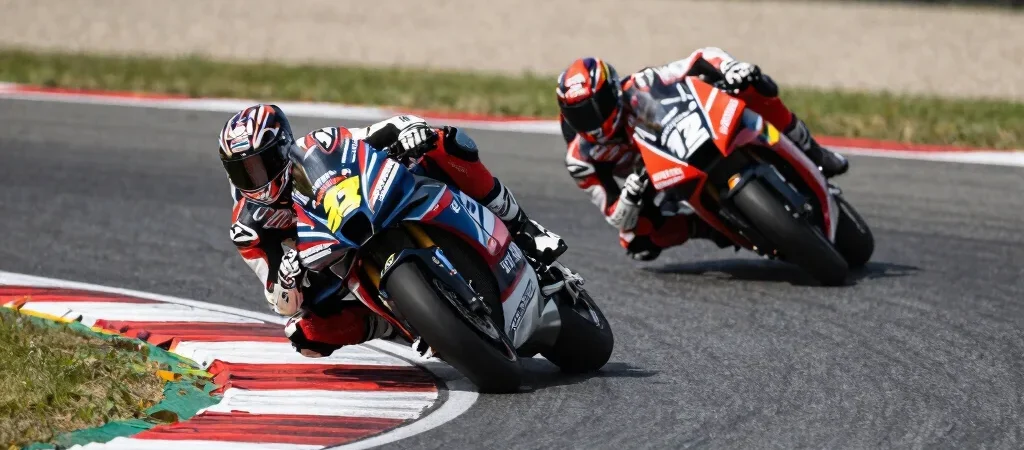
A pass can look sudden from the grandstand: one rider arrives at the braking zone and comes out ahead. Rewind the sequence, though, and the real contest may have started on the previous corner, where a better exit created the chance to choose a line and apply pressure.
Trace the move backward
When two WorldSBK riders run close, watch where each one starts braking and how much speed they carry into the turn. A rider who takes a defensive line may protect the inside, but that choice can leave a tighter exit or a slower run onto the next straight. The other rider is looking for the sequence that turns that small compromise into a realistic attack.
Onboard video can make the difference clearer. Pay attention to how early a rider picks the bike up and whether the rear wheel tracks cleanly onto the exit, rather than treating every late-braking attempt as the decisive moment. The pass itself is the visible part; positioning and exit speed often set its terms.
Separate pressure from opportunity
A rider following closely can make the leader alter a line or defend a braking zone, but pressure does not guarantee a clean opening. The follower still needs a run that does not leave them exposed at the next change of direction. Watch whether they can stay close through more than one corner, not just appear briefly alongside.
That is why a good race report should describe more than who completed the pass. Note where the riders gained or lost ground, how the response unfolded, and whether the move held through the next braking zone. It gives the result shape—and gives the next battle something to build on.